Serving Buffalo, Amherst, Cheektowaga, Lancaster, Hamburg, West Seneca, Tonawanda, and Niagara Falls, KD Pool Builders helps local homeowners maintain attractive outdoor spaces throughout Western New York. Homeowners in Buffalo ZIP codes such as 14201, 14202, 14203, 14207, 14210, 14213, 14214, 14215, 14216, 14217, 14220, 14221, 14222, and 14223, as well as surrounding communities, can experience the same summer pool maintenance challenges.
Let’s face it, a green swimming pool isn’t just ugly; it’s downright uninviting. Once algae get a foothold, the water turns cloudy and murky, and swimming feels a lot less tempting. In Western New York, the summertime staples rain, sun, and, honestly, inconsistent upkeep- can send pool owners scrambling to deal with a slime takeover.
Whether your home is near Buffalo’s Canalside, Delaware Park, Walden Galleria in Cheektowaga, the waterfront in Tonawanda, or the beaches and lakefront areas around Hamburg, a green pool can become a frustrating summer maintenance problem.

The upside? You don’t have to live with a green pool. With quick action and the right cleaning steps, you can get that water clear again. The trick is to do more than just toss in some chemicals and hope for a miracle. You need a game plan.
Here’s the rundown on how to spot and tackle pool algae, plus what it takes to turn a swampy mess back into something you actually want to dive into. Effective pool algae cleaning in Buffalo and nearby Western New York communities starts with identifying the type of algae, checking water chemistry, and choosing the right treatment. If it all feels too overwhelming, you can always give KD Pool Builders a call at (716) 300-2773.
Identifying Algae Types: How to Tell What’s Growing in Your Pool
Not all algae problems look the same. The way your water looks can tell you a lot about what you’re dealing with.
The most common culprit is green algae. It often makes your pool water look light or dark green or just fuzzy and cloudy. Sometimes it feels slimy underfoot, especially if chlorine runs low or water isn’t moving well.
Then there’s yellow or mustard algae, a little less common, a lot more stubborn. You’ll usually see yellowy dust or patches clinging to walls and steps. Get rid of it once and don’t fix the root cause? It comes right back.
Black algae are even tougher. They show up as tiny dark spots, really rooted into the pool surface. This kind needs some muscle and repeated treatments.
No matter what you’re dealing with, stop swimming until the pool is cleaned up and the water is clear and properly balanced. The CDC recommends keeping disinfectant and pH levels in the appropriate range and testing pool water regularly. CDC guidance recommends a pool pH of 7.0 to 7.8 and regular testing of chlorine and pH.
Proper pool algae cleaning starts with identifying the type of algae affecting your water. Homeowners in Buffalo, Amherst, Cheektowaga, Lancaster, Hamburg, West Seneca, Tonawanda, and Niagara Falls may need different cleaning and treatment approaches depending on the severity of the algae growth.
Why Pools Go Green
Green pools happen when algae outpace the sanitizer, usually chlorine. Hot, rainy weather, bad circulation, or low chlorine open the door for growth.
Add in debris, leaves, pollen, dirt, and things get messier. When water doesn’t move or get filtered enough, algae settle and spread.
This is why dumping in more chlorine without cleaning is usually a waste. The right fix takes testing, scrubbing, running the filter, adding chemicals the right way, and actually removing dead algae.
This is especially important during the Western New York summer, when heavy rain can introduce debris and change pool water conditions. A pool near Buffalo’s Lake Erie waterfront, the Niagara River, or residential areas around Amherst and Tonawanda may also collect leaves, pollen, and other organic material that can contribute to water-quality problems.
24-Hour Recovery Steps: How to Recover a Green Pool Fast
Lots of people search for “emergency green pool shock buffalo ny” hoping for a quick fix. Truth is, a seriously green pool might need more than 24 hours, but the sooner you start, the better your odds.
For homeowners asking, “How to clear a green pool fast in Buffalo, New York?” the answer starts with proper testing, physical cleaning, circulation, filtration, and following the instructions for the specific pool treatment being used.
A complete pool algae cleaning process involves more than adding chlorine. It includes testing the water, brushing affected surfaces, applying the appropriate treatment, running the filtration system, and removing dead algae and debris.
Step One: Test the Water
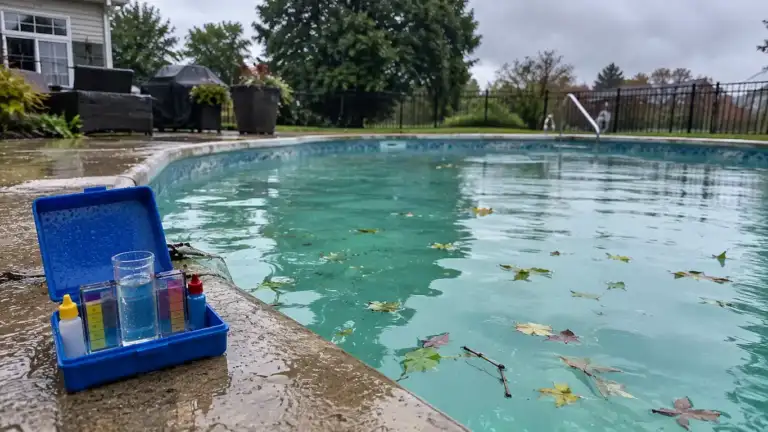
Don’t guess. Before adding anything, check free chlorine, pH, and whatever else your pool needs you to monitor.
Why does pH matter? Because when it’s out of whack, chlorine doesn’t work well. Your pool pH should stay between 7.0 and 7.8.
Always measure chemicals for your pool’s size and situation. Guesswork leads to wasted time and money.
For accurate pool algae cleaning, test the water before beginning a shock treatment and continue checking the water during the recovery process.
Step Two: Brush Everything
Take a pool brush and scrub the walls, floor, corners, and steps. You want to peel algae off the surfaces so chemicals actually hit their target.
Don’t ignore the out-of-the-way spots, around ladders, behind steps, or in corners where water sits.
Brushing is an important part of green pool cleanup. Buffalo homeowners should not skip it because algae can remain attached to surfaces even after the water begins looking better.
Step Three: Shock It (the Right Way)
Now you add pool shock, but only according to the directions on the product label. There’s no one-size-fits-all amount; different products have their own instructions and strengths.
Follow every safety warning. Never mix chemicals unless the label says it’s safe, and wear protective gear.
A proper pool algae shock treatment should always be based on the pool’s water volume and the specific product being used. The CDC recommends following manufacturer instructions for pool chemicals and maintaining appropriate chlorine and pH levels: https://www.cdc.gov/healthy-swimming/about/home-pool-and-hot-tub-water-treatment-and-testing.html.
Step Four: Run the Filter
Get your filter and pump running. This keeps water moving and pulls dead algae and debris out.
If the water turns cloudy after treatment, that’s normal; dead algae are breaking up and getting filtered out.
Check and clean your filter as you go. A clogged filter slows everything down.
Step Five: Brush and Vacuum Again
Algae love to settle back onto pool floors and walls. Keep brushing to kick debris back into circulation so your filter grabs it.
Vacuuming can help pull stubborn, settled junk right off the bottom.
Vacuuming is an essential part of pool algae cleaning because killing algae is only half the job. Dead algae, dirt, and remaining organic material must also be removed to help restore clear water.
Green Pool to Clear Water: Going from Green to Clear
Changing a green pool to clear water isn’t instant. Start by killing the algae, then get rid of what’s left behind.
If the water stays cloudy, keep testing, brushing, and filtering. Don’t just keep dumping in different chemicals hoping for a miracle.
When things don’t improve, or problems keep coming back, it’s time for a pro. Sometimes there’s an issue with circulation, the filter, or the water balance that you can’t fix alone.
If you’re dreading a pool-cleaning marathon, KD Pool Builders at (716) 300-2773 is always an option.
Professional pool algae cleaning can help Buffalo homeowners when algae keep returning, water chemistry remains difficult to balance, or circulation and filtration problems prevent the pool from clearing properly.
How Much Shock Does a Green Pool Need?
People always ask, “How many gallons of shock do I need?” There’s no magic number. Every pool’s different, and every shock product is too.
You have to base the amount on the pool’s size and the strength of what you’re adding. Two same-sized pools might need very different doses.
Follow the instructions. If you’re lost, just ask a pro.
The correct amount of pool shock should be determined from the pool’s actual water volume and the product’s label instructions. Avoid estimating a dose based only on the color of the water.
Simple Green Pool Cleanup Guide
| Cleanup Stage | What to Do | Why It Matters |
| Water Testing | Check chlorine and pH levels | Helps determine the pool’s current condition |
| Brushing | Scrub walls, floor, steps, and corners | Loosens algae attached to pool surfaces |
| Shock Treatment | Follow the specific product label | Helps control active algae |
| Filtration | Run the pump and filter as directed | Removes suspended debris and dead algae |
| Vacuuming | Remove settled algae from the pool floor | Helps physically remove dead algae |
| Prevention | Maintain proper water chemistry and circulation | Helps reduce future algae growth |
Pitfalls to Avoid During Algae Cleanup
Here’s what trips people up:
Adding chemicals without testing first. If your pH is off, chlorine won’t work well.
Forgetting about the filter. Killing algae is step one; you still need to pull it out of the water.
Quitting brushing too early. Even if the water looks better, stubborn algae hug surfaces.
Mixing chemicals. Don’t do it unless the label says so. Mixing can be dangerous.
Another common mistake is assuming that clear-looking water automatically means the pool is ready for swimming. Test the water and follow the product instructions before allowing swimmers back into the pool.
Prevention Tips: How to Avoid a Green Pool in Buffalo
- The best way to beat algae is to stay ahead of it.
- Test your water often.
- Keep your filter and pump in great shape.
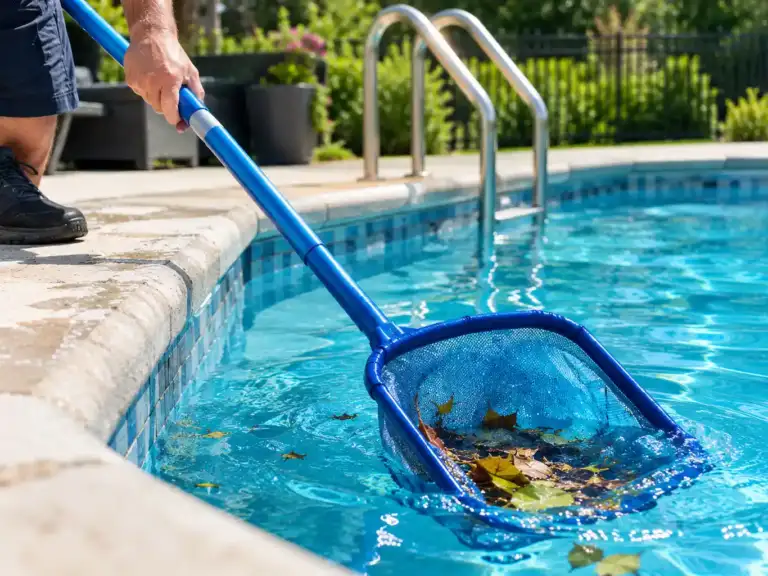
- Scoop out leaves and debris before they pile up.
- Brush the walls and floor regularly.
After big storms, always check the water. Rain can mess with your pool’s balance.
Above all, maintain the right chlorine and pH levels. It keeps swimmers safe and holds back algae and other nasties. For more details on good pool care, the CDC’s Home Pool and Hot Tub Water Treatment and Testing Guide is a solid resource.
This matters throughout the local service area, including Buffalo, Amherst, Cheektowaga, Lancaster, Hamburg, West Seneca, Tonawanda, and Niagara Falls. In communities near Canalside, Delaware Park, Walden Galleria, Ellicott Creek, the Niagara River, and the Lake Erie shoreline, regular pool maintenance can help homeowners stay ahead of seasonal water-quality problems.
When You Need a Pro
If you’re staring at a swamp and nothing’s working, or you don’t even know where to start, it’s fine to ask for help. A pro can pinpoint circulation issues, clogged filters, or chemical imbalances and get the pool back on track.
When your Western New York pool needs serious help, you can call KD Pool Builders at (716) 300-2773.
KD Pool Builders is based at 5369 Marguerites Wy, Clarence, NY 14031, and its published service area includes Western New York communities. The company lists services including Landscaping, Landscape Maintenance, Lawn Care, Mulch Installation, Snow Removal, Sod Installation, Spring Clean Up, and Christmas Light Installation.
For homeowners looking for local help around Buffalo and surrounding communities, contact KD Pool Builders at (716) 300-2773 to discuss your outdoor maintenance needs.
FAQs
How much shock do I need to fix a green pool?
It depends on your pool’s size and the shock product’s strength. Always read and follow the label.
How long does it take to clear up a green pool?
A light case might clear up fast. Bad cases can take several days of shocking, filtering, and cleaning.
Is it safe to swim in a green pool?
No, wait until the water’s been cleaned, tested, and is back in balance.
Should I vacuum out dead algae?
Yes. Removing dead algae stops it from piling up and makes cleanup faster.
How can I stop my pool from turning green again?
Stick to regular testing, steady chlorine and pH, solid filtration, brushing, clearing debris, and steady maintenance.
A green pool is frustrating, but timely pool algae cleaning can help prevent a minor water-quality problem from becoming a much bigger maintenance issue. Stay on top of the basics- testing, cleaning, treating, and filtering- and your pool stays swimmable. If you use chemicals carefully, follow directions, and solve the root causes, clear water’s totally within reach.